The “What If” Game That Stole My Day
I did not mean to start the game. It just began, the way a song starts in your head without asking.
It was Wednesday morning, and I was walking into school when a thought rolled a pair of dice. What if I say the wrong thing in class today? The dice clattered, and my little gray game piece moved forward three spaces.
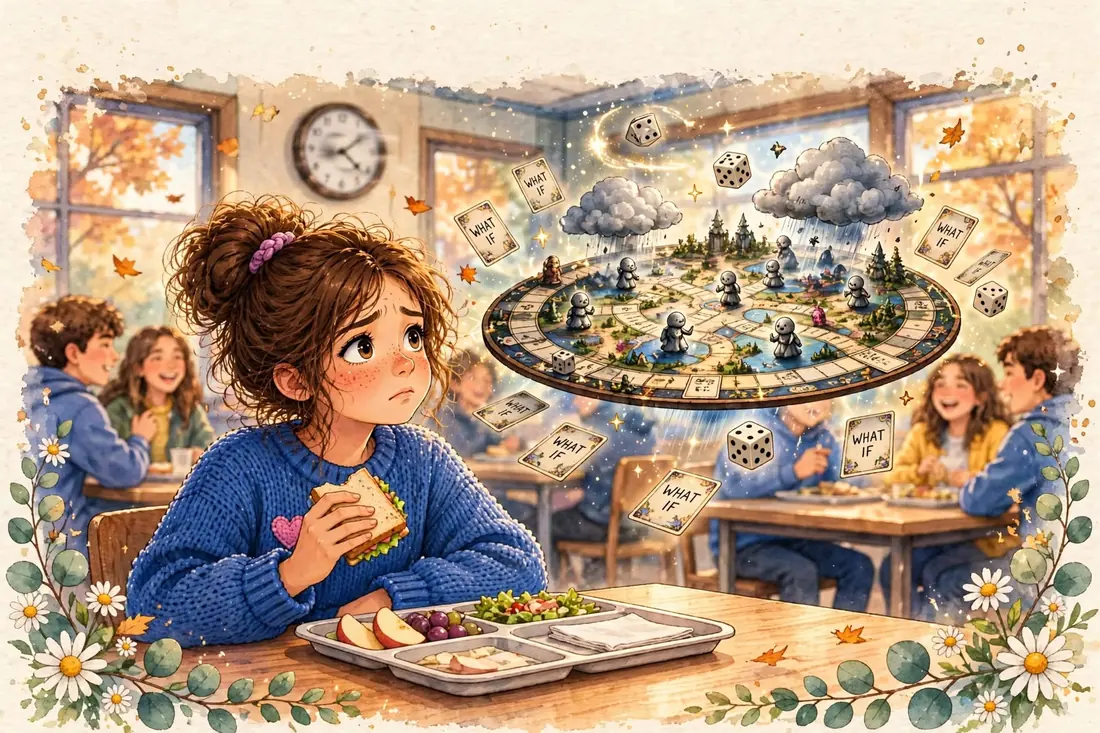
By second period, the board was fully set up. It floated somewhere above my desk, wide and round and shimmering, with tiny gray figures marching along a winding path and storm clouds hanging over every corner. Cards flew down from the air, each one printed with the same two words. What if.
What if Zoe is busy at lunch? What if nobody sits with me? What if I forget my homework? What if the teacher is mad at me? What if they all stop liking me by Friday?
Every card made me move a space. Every space brought a new card. And the strangest part about this game is that nobody ever wins it. It only gets bigger.
At lunch, I sat at my usual table with a sandwich in my hand. I held it for the whole period, and I did not take a single bite. Around me, the cafeteria was bright and loud. Kids were laughing about a video, and someone dropped a tray, and the clock on the wall ticked its way toward one o’clock. I noticed none of it. I was too busy playing.
What if it all goes wrong?
What if I can’t stop playing?
What if I lose the whole day?
The rules nobody told me
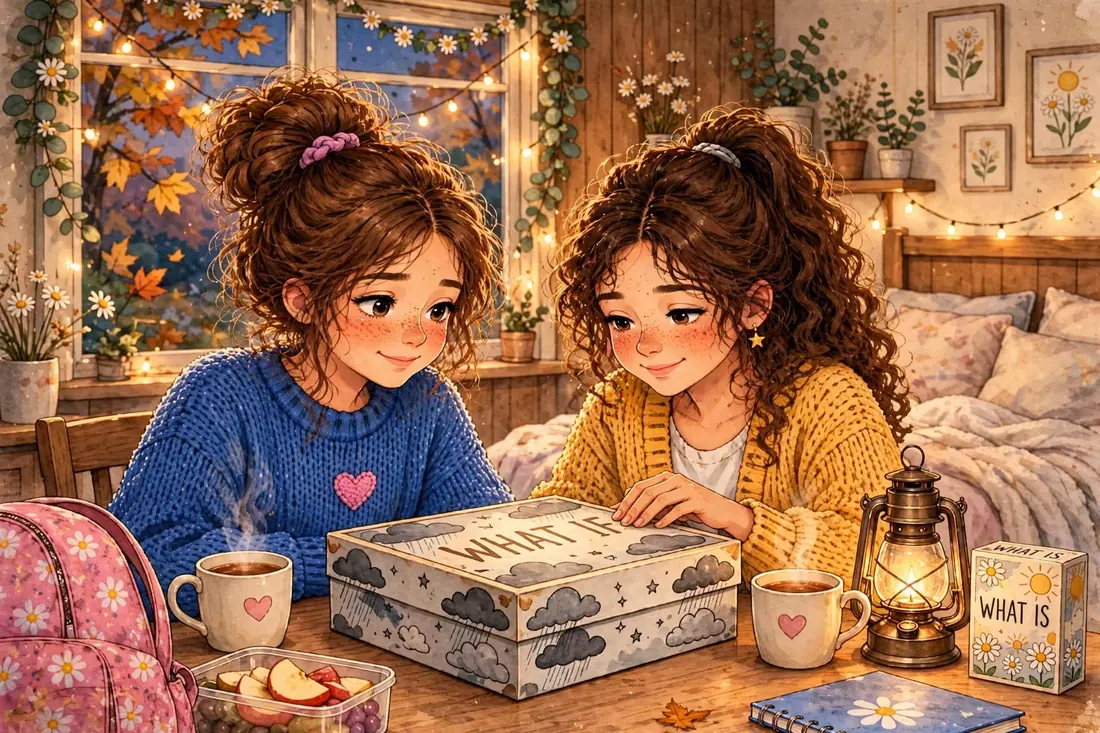
That evening, Zoe came over with two mugs of cocoa and a very serious expression. She put a small brass lantern on my kitchen table and sat down across from me.
“You were gone all day,” she said gently. “You were sitting right there, but you were somewhere else.”
I looked down at my hands. “I was playing a game.”
“A game?”
So I told her about the board, the dice, and the cards. I told her how every card moved me one space, and how I never seemed to reach the end. Zoe listened, and when I finished, she did not say, “That’s silly.” She said, “Let’s look at the rules.”
I blinked. “I didn’t know it had rules.”
“Every game does. Even this one. Let’s read them together.”
We took a piece of paper and wrote them down, one by one, in her neat, round handwriting.
Rule one: you can’t win. The board has no finish line.
Rule two: every card you draw makes the board bigger.
Rule three: the game doesn’t care if you are hungry, tired, or in the middle of your life.
I read them twice. It was a very odd feeling, like finding out that the shiny game I had been playing for years was a game that nobody could ever win.
“So why am I playing?” I whispered.
“Because it showed up,” said Zoe, “and you didn’t know you could stop.”
A different game
Zoe reached into her bag and set a small wooden box on the table. It was covered in tiny daisies and little suns, and in neat letters on the lid, it said What Is.
“This is the other game,” she said. “It has only three cards, and you can play it anywhere.”
She turned over the first. What is in my hands right now?
I looked. A warm mug. A paper napkin. My own fingers, a bit cold.
The second card. What can I see, hear, and smell?
A lantern, glowing gold. Cocoa steam. The faint sound of Zoe stirring her mug with a spoon.
The third card. What is one kind thing I can do next?
I thought about it. “Eat something. I haven’t had lunch.”
“Then that is your move,” said Zoe, handing me a cookie. “And look, no dice.”
I laughed. I actually laughed, a real, tired, relieved laugh. It felt like opening a window in a stuffy room.
Then, together, we took the old game, the gray box with its clouds and its endless board, and Zoe said, “Let’s give it a bedtime.” We decided that the “What If” game could come out for ten minutes every afternoon, at a table, with a timer, and a pencil to write the cards down. When the timer rang, the box would close. And for the rest of the day, we would play “What Is.”
The day I got back
The next day was Thursday, and it was golden and windy, the kind of afternoon that smells like leaves.
After school, we walked to the park with the gray box tucked under Zoe’s arm and a kite in my backpack. We set the timer on her phone for ten minutes. I sat on a bench with a pencil, and I wrote down every “what if” that came to mind. What if I fail the test. What if I say something strange. What if Zoe gets tired of me.
When the timer rang, I looked at the page. They were only words on paper, sitting in a row. Zoe closed the box, set it on the end of the bench, and smiled.
“Game over for today,” she said.
Then she took the kite out of my backpack. It was a red one, shaped like a heart, with a long tail of little paper leaves.
I ran. The wind pulled the string, and the kite rose over the trees, higher than I thought it could go. I laughed so hard that I forgot to be anxious about whether I was laughing too loudly. Zoe ran beside me, shouting something I could not hear, and the golden leaves swirled around both of us like confetti.
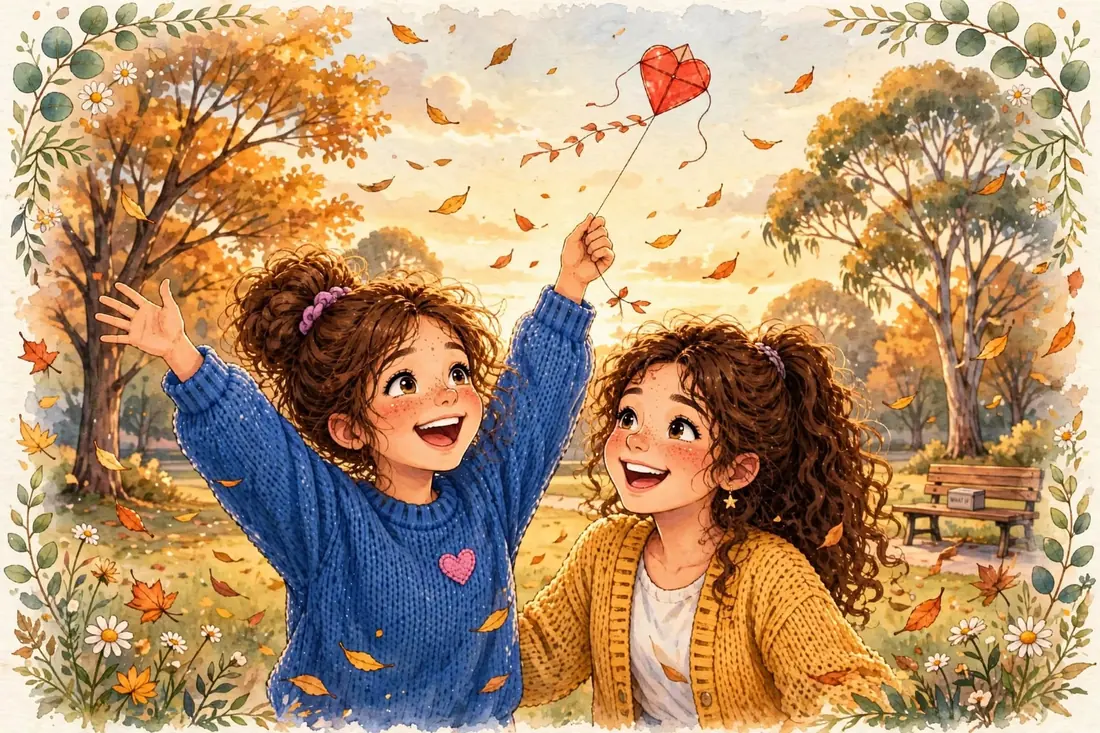
That is what I remember most about that day. Not a single card, not a single dice roll, just the string in my hand and the wind in my sleeves, and how big the sky was.
I still play the “What If” game sometimes. It still tempts me, with its shiny board and its dramatic clouds. But now I know the rules. I can’t win, so I do not have to play for long. I give it ten minutes, and then I close the box.
And when the box is closed, I pick up the other game. What is in my hands? What can I see? What is one kind thing I can do next?
It turns out that the best game I ever played had no board at all. It was just a Thursday, a kite, and a friend.
With love,
Lina